How to deal with cold callers

Keeping you safe in your home.

What is a cold caller

A cold caller is someone who comes to your door that you are not expecting. They can be men or women.
They will try to sell you something that you do not want or need.
Cold callers will be polite at first and will seem friendly. They might ask you how you are.
Do not give your personal details out to strangers on your door.
If in doubt keep them out!

Opening your door safely

When someone comes to your door it is important to remember the following things:
Look through a spyhole or window to see who is there.
Hold the bold as you open the door or put a chain across the door before you open it.
Always ask for I.D if you do not know the person.
Do not say you are alone.
Close the door if you are unsure or unhappy.

If cold callers become a worry or nuisance:

You can go into your local police station and show your safe place card.
You can tell your local PCSO.
You can dial 999 if you are threatened or abused.
You can phone 101 if they have left but you are upset.
With thanks to Dawn from the Crownhill Comms Room and Plymouth People First who worked with Devon and Cornwall Police to produce this information.

What to tell the police when calling 101 or 999

This page tells you when to phone 999 or 101 and what questions you will be asked.

Phoning 101 or 999

When you need help or advice about a crime or incident it is important that you phone the police.
If you are not in danger, are unsure what to do, want to contact your local PCSO or have lost or found something you can call 101.
You must phone 999 if the crime you have experienced has just happened or is happening now. This includes being threatened, assaulted or burgled.

Questions you will be asked

When you phone either 101 or 999 you will be asked lots of questions. This is so the police can make sure you get the right kind of help.
It is important to tell the operator:
If you are in danger, if you are alone, where you are calling from and who was involved.
What happened and when it happened.
Where it happened.

You also need to say

Your name and address.
Whether this has happened before.
How you are feeling and if anyone is with you
Whether you have any additional needs for example: a learning disability, are hard of hearing, use Makaton.
With thanks to Dawn from the Crownhill Comms Room and Plymouth People First who worked with Devon and Cornwall Police to produce this information.

Information about Cuckooing and County Lines

What is Cuckooing?

Cuckooing is when someone you don’t know takes over your home and uses it as a place to sell, supply or store drugs.

What is County Lines?

County Lines is when drug dealers travel to different areas to sell drugs. This includes Devon and Cornwall. They use mobile phones to sell drugs and ‘cuckoo’ taking over people’s homes.

Things to look out for

Someone who stays in your home longer than you want them to. Someone who takes over your home and does what they want in your home.
Someone who threatens or hurts you or someone who invites other people to stay in your home without asking you.
Someone who pays bills for, offers you drugs or gives you gifts or cash or someone who sells, or supplies drugs from your home or stores them in your home. Sometime people even block off your doors so people can’t get in.

What to do to keep safe

Make sure your windows and doors are shut and locked and do not give your door key to anyone.
If someone tries to get in to your home and you don’t feel safe phone the Police on 999. Tell the Police it could be ‘Cuckooing’.
You should also tell your local Police Officer, Housing Officer, Doctor or Drug and Alcohol worker.

Where to get advice or help if you are worried

Talk to your local Police Officer or PCSO
Contact the Devon and Cornwall Victim Care Unit

Visit the Victim Care Unit website

Talk to your Doctor

For information about Drug and alcohol services

Talk to Frank – Honest information about drugs

Talk to Frank website

With thanks to Dawn from the Crownhill Comms Room and Plymouth People First who worked with Devon and Cornwall Police to produce this information.

Attention! There may be drug dealing in your area

Devon and Cornwall Police know that drug dealing is happening in their area. If you use drugs or know someone who does we want to help you so that it stops.

Sometimes drug dealers take over people’s homes to supply or store drugs. They pretend they are friends but do not act like it. They may refuse to leave and invite other people to stay.
They may damage things in your home, threaten or hurt you.
Taking over someone’s home to use to sell drugs is called ‘Cuckooing’ – see our page about ‘Cuckooing’ and County Lines.

We want to stop dealers in this area and we need your help.

We want to work with you to keep you safe and you can talk to us in confidence. We will work with other services to help you.
If this has happened to you and you don’t tell the Police or your housing provider you could be breaking the law.
If you would like to talk to someone about this please contact your local officer. In an emergency please phone 999.
With thanks to Dawn from the Crownhill Comms Room and Plymouth People First who worked with Devon and Cornwall Police to produce this information.

Mate crime – how to spot it

Below are some examples of a learning disability mate crime

Mate crime is when someone pretends to be your friend because they want to use or take advantage of you.
Mate crime is when someone borrows your mobile phone and uses up all your credit.
Mate crime is when your ‘mate’ comes round on the day you get your benefit money so you can go to the pub and buy him or her lots of drinks.
Mate crime is when your family members take money off you without asking you.
Mate crime is when your ‘friend’ takes you out in the car and then charges you £20 for taking you.
Mate crime is when your neighbours call you names each time they see you but always say they are ‘only joking’.
Mate crime is when friends send abusive (rude or threatening) emails or texts to you. This includes messages on Twitter and Facebook.
Mate crime is when your ‘mate’ comes to your place, stays a couple nights, eats all your food and drink and leaves you with nothing for the rest of the week.

What to do if you are a victim of mate crime

Tell someone you trust for example: your support worker, advocate or centre manager who will help you to call the police.
Call the police on 999 saying you think you have been a victim of learning disability mate crime.
Call your local safeguarding adults team.


Cornwall Adult Safeguarding: 0300 1234 131


Plymouth Adult Safeguarding: 01752 668000


Devon Adult Safeguarding: 0345 1551 007


Somerset Adult Safeguarding: 0300 123 2224


Talk to Stop Hate UK on free phone 0800 138 1625, they are open 24 hours a day.
  • Lorem ipsum scelerisque malesuada nisi
  • Honcus diam semper vitae
  • Phasellus eget massa nisl
  • Fusce urna sem
  • Lobortis sit amet faucibus
  • Ultrices et turpis.
  • Lorem ipsum scelerisque malesuada nisi
  • Honcus diam semper vitae
  • Phasellus eget massa nisl
  • Fusce urna sem
  • Lobortis sit amet faucibus
  • Ultrices et turpis.
With thanks to Dawn from the Crownhill Comms Room and Plymouth People First who worked with Devon and Cornwall Police to produce this information.


Keeping safe from loan sharks

What is a loan shark or illegal money lender

Illegal money lenders are also known as loan sharks.
Loan sharks are people who lend money without permission and are criminals.
Loan sharks can appear very friendly and helpful at first if you are having problems with your money. This is because they want to get you into debt.
If you cannot pay what you owe loan sharks will often threaten you with violence to make you give them money.

How to know if you’ve met a loan shark

The Illegal Money Lending Team have the following 4 questions to help you know if you have met a loan shark.
Question 1. Has someone lent you money at your door and are charging you a lot of interest?
Question 2. Have you been threatened when you couldn’t pay?
Question 3. Has someone taken your bankcard to look after until you have paid what you owe?
Question 4. Does the money you owe keep getting bigger even though you are making payments?

What to do if you have met a loan shark.

If you have answered yes to any of the questions you have been targeted by a loan shark.
You can call the Illegal Money Lending Team 24 hours a day, 7 days a week, on 0300 555 2222 to make a report.
Talk to your local PCSO if you are worried or suspicious.
Phone 999 if you have been threatened or feel scared.
With thanks to Dawn from the Crownhill Comms Room and Plymouth People First who worked with Devon and Cornwall Police to produce this information.
shark apple

Staying safe and Staying healthy

We have added a new section to our website called Useful information.

We think part of providing good support is giving the people we support information to help them stay safe and stay healthy.  We have started the Useful information by adding some pages about bad people who pretend to be friends. Soon we will be having pages about health checks, healthy food with recipes and activities to keep you fit.

Follow this link to visit Useful information


Our first pages are:

Keeping safe from loan sharks

Mate crime – how to spot it

Information about Cuckooing and County Lines
How to deal with cold callers

What to tell the police when calling 101 or 999

Plymouth Summer Picnic 2019

Independence day brought one of the hottest days of the year to Plymouth and a lot of staff and people we support were out in force to enjoy to it.

We invited people along to join us for our summer picnic and were really heartened to see so many people, it made for a great day and atmosphere. People heeded the warnings and were well prepared with colourful summer hats and plenty of sun cream. Hannah looked particularly well suited to the hot weather and she wouldn’t have looked out of place on the shores of Bermuda never mind Central Park!
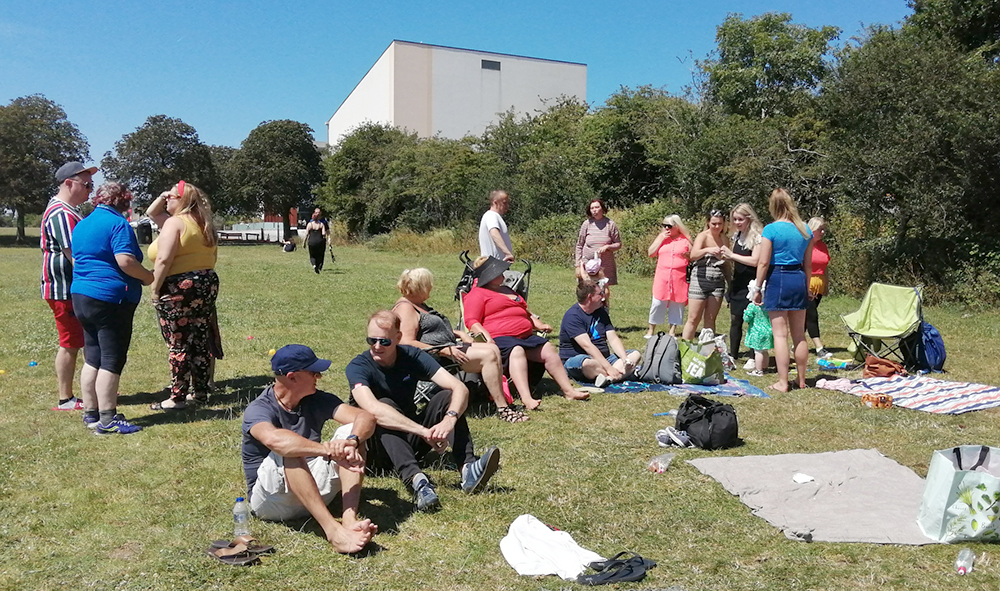
People enjoying the weather in the park

People were invited to bring their own picnics with Beyond Limits providing plenty of drinks. Camping chairs and travel rugs were quickly set up and before long we had managed to take over a small area in the corner of the park, Menna provided the shelter by way of a small gazebo, which in hindsight was a great idea.
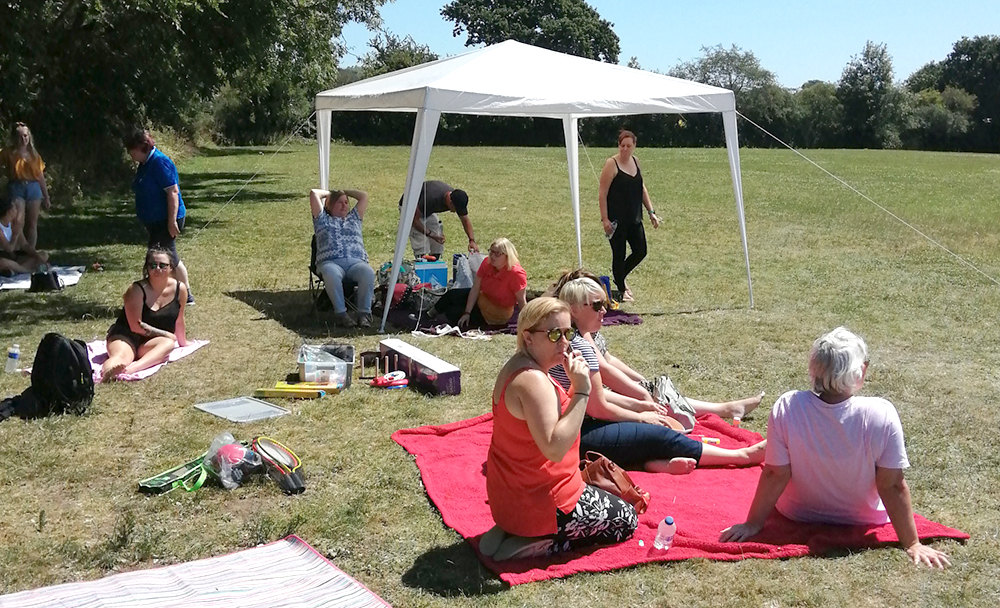
Some people are enjoying the shade under the gazebo in the park

Games were also the agenda for the day and despite the heat people’s competitive nature rose to the occasion and two teams to play a game of rounders were quickly established. Gemma quickly taking control and picked out her team, Chantelle matching her and bravo we had our two teams. Everyone who took part did really well, although next time Menna you are not going in as the backstop ! Credit goes to Tom for a magnificent catch and Sarah and Michelle for some fabulous bowling.


All in all it was a fabulous day with people really appreciating spending time together and agreeing that we should meet up more often.
THANK YOU FOR HELPING

A huge thank you to everyone who came along and to all those who contributed to the organising and setting up, the whole event was an absolute success. Well done everyone.

Exeter Jobs Fair Wednesday 4 September

Beyond Limits is recruiting in the Southwest and we have a range of positions available. We offer a competitive starting salary, excellent training and career development.

We are looking for staff who can see the person behind the disability, who can help the people we support to achieve their dreams, goals and ambitions. For more information about the benefits of working for us visit Susannah’s “Reasons to become a support worker”.

If you are looking for an exciting challenge and want to make a real difference, then come along to our jobs fair on the Wednesday 4 September 2019 at the Corn Exchange in Exeter. We’ll be there from 10am to 1pm and would love to chat to you and tell you more about these opportunities.


Exeter Corn Exchange, Market Street, Exeter, EX1 1BW.


Telephone: 01392 665938


Keep your heart and yourself Healthy!!

This page will tell you the best ways to keep your heart healthy.

It is very important for all of us to look at the way we live! Eating too much of the wrong food, drinking too much alcohol, smoking, not getting enough exercise and being stressed out can all damage our hearts.
Keeping your heart healthy means you can keep doing the things you like, and enjoying life, for longer!

The heart of the matter!

Your heart is a muscle in your chest that pumps blood around your body. You need this to live!

If you eat too much of the wrong food, or smoke, or drink too much alcohol, or don’t get enough exercise, your heart could stop working properly. You could have a heart attack and die!
Your heart pumps blood around your body through tubes called arteries. They should be nice and clear.
Eating the wrong food, smoking and not getting enough exercise blocks these tubes with fat. They get narrower and your heart has to work extra hard to make the blood flow through them.

Smoking

Smoking is bad for your heart and lungs. The nicotine in cigarettes raises your blood pressure. People who smoke are often short of breath and cough a lot.
It makes you smelly too!
Once you start smoking it’s hard to stop, but there are people who can help if you want to.
Your doctor, community nurse or carer can all help you stop smoking, but you have to want to do it!

Alcohol

Drinking too much alcohol is bad for you in lots of ways, but it’s very bad for your heart.

If you drink too much alcohol you will damage your heart and you may get other health problems or injure yourself.

You may also get drunk, which can cause problems too!

Drinking some alcohol is OK. It’s better to drink small amounts over a time than to drink a whole lot in one go. When you are out in the pub or at a party make each drink last a long time. Have a non-alcoholic drink in between the alcoholic ones.
You should have at least two days a week when you do not drink at all.

Food that’s good for you

One of the best ways to keep your heart healthy is to eat the right sort of food. You should eat five portions of fruit or vegetables each day to stay really healthy. This picture shows are some types of food that are good for you.
If you’re not sure what kind of food is good for you, ask your dietician, community nurse or doctor.

Food that’s bad for you

Greasy fatty food, like chips and pies, and sugary foods like sweets and chocolate are not very good for your heart.
Try not to add salt to your food. It’s probably tasty enough without it anyway! Try to cut out sugar altogether, but if you still need to sweeten your tea and coffee, you can try an artificial sweetener.

How much should you eat?

You should have proper sized portions when you eat. You can see below roughly how much that is. Sometimes people eat too much because they feel down. You’ll be a lot happier if you look and feel good!

How do you know if you have a weight problem?

People are all different shapes and sizes, so it’s hard sometimes to know if you are overweight.
Remember, being underweight is a problem as well! You need to eat more of the right food, and get some exercise.
If you’re not sure, you should ask your doctor for help. They will weigh you and take your blood pressure. This is a good way to tell if you need to lose weight and tell if your heart is OK.

Get some exercise!

One of the best ways to keep healthy and keep your weight down is to get regular exercise. You don’t have to do anything too difficult. A lot of things you do for fun are great exercise, like dancing, swimming or going for walks.
You can even do exercises while sitting watching the telly. Try lifting your feet off the ground and holding them there for the count of ten.
Housework is great exercise. Try a bit of hoovering and cleaning.

Are you stressed out?

One of the main causes of heart attacks is stress – worrying about things all the time and not taking it easy. People can get stressed over lots of things – changes in their lives, moving to a new home, not getting on with people, filling in forms, going to meetings… Aaargh!

Relax!

You can stop feeling stressed by taking time out to do things you enjoy. Listen to music, take a relaxing bath, have a nap.
Pets are great for relieving stress too!

Some people you can talk to

Some community nurses can offer you a free check-up in your own home. Your doctor should be able to help you get in touch with them. Your doctor can give you a check-up too.


FAIR in association with Community Nurses for People with Learning Disabilities, NHS Lothian. This work was made possible with support from the The Esmee Fairburn Trust and Lloyds TSB Foundation for Scotland.

Female Health: Breast Awareness

When you are age 50 you will be offered Breast Screening appointments every 3 years.

This page helps you make sure your breasts are healthy.
You need to know what is normal for you, how your breasts look and feel.

Below are the changes you should look out for

These pictures have been taken from a great website about women’s health called The Pink Ribbon Foundation.


Any changes in size or shape.
A change in skin texture such as dimpling or puckering.
Any lumps or a lumpy area • which may not be visible but which can be felt.
Any change to the nipple in appearance or direction.
A discharge from one or both nipples or any rash or crusting of the nipple or surrounding area.
Any pain or swelling in the breast area, armpit or collarbone.

What to do if you find something NEW

If you are checking yourself and you find something that wasn’t there before, arrange to see a doctor.

Arrange to see your doctor or community nurse. They will know what to do.

Ask a Pratice Nurse

You can ask your Practice Nurse to help you become breast aware and ask for a Breast Awareness Leaflet for visual help in how you check your breasts.


If you need extra support to prepare for a breast screening appointment, you can contact The Learning Disability Community Nurse Team on Telephone: 08451558077


Breast pictures from Pictures from Pink Ribbon Foundation. Other information produced by FAIR in association with Community Nurses for People with Learning Disabilities, Lothian Primary Care NHS Trust.

Men’s health: Testicular Awareness

Cancer of your Testicles (Balls) can develop in men from the age of 15 years onwards
therefore you should not feel embarrassed to talk to your parents, friends or partners about
Testicular self examination.

Check your balls about once a month. If you have any concerns talk to your Doctor.
AFTER ALL IT’S YOUR HEALTH AT STAKE.

Watch a helpful video

Here’s a good video that tells you how to do an examination from ITV’s Lorraine Breakfast show.

Changes you should look out for:

  • Small hard painless lump
  • A dull ache
  • A testicle getting larger
  • One testicle feeling heavier than the other
  • Collection of fluid.

How to look after my balls

Check your balls about once a month.
Check for lumps
Check for swelling, and check to see is one ball is getting larger?
Do you have any pain or discomfort?
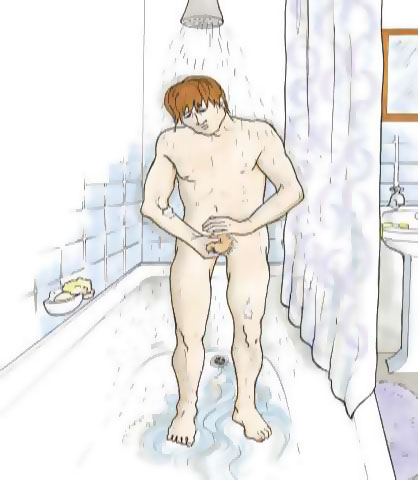
A good way to check yourself is in the shower, where you are warm.
Ask for help straight away if you find something wrong.
Don’t wait! Go and see your doctor straight away.


Don’t wait! Go and see your doctor straight away.

What to do when you have Type 2 diabetes

On this page are a video and two booklets about Diabetes.

What is diabetes video

What to do when you have diabetes – An easy read guide.

The first booklet is by Diabetes UK who are leading the fight against diabetes.


If you are using a desktop or laptop computer you can click on the Full Screen button to zoom the page. Click on your browser’s back button to return to normal size.

Getting started if you have Diabetes

This booklet was produced by the Bristol Central Community Learning Team.

Photo of two ladies busy making Christmas decorations

Christmas decorating workshop at Beyond Limits

People we support, family and friends brought Christmas to Beyond Limits recently. The office was buzzing with festive activity at our first Christmas decorating competition.

The competition involved decorating two floors of the office. Martha won the first floor with her stars and paper chains. Hannah won the second floor with her wreaths and door decorations.

Photo of finished paper chain and Christmas decorations Photo of people making Christmas decorations Photo of finished paper chain and Christmas decorations Photo of lady and her Christmas wreath

Previews of some pages from the first edition of our newspaper

Beyond Limits launches a Newspaper for the new decade

As part of our celebration of the great work our staff do, the people we support and their friends and families we have produced a printed newspaper.

There are stories from our support workers, trainers and people connected to Beyond Limits plus information about new staff benefits. Our aim is to produce two or three editions a year so we have started collecting stories for the next edition already! If you would like to share a story or recommend somewhere to visit we’d love to hear from you.

Contents of edition 1

  • Chantelle at college / MacMillan fundraiser
  • Recommend a Friend scheme is changing / Health & Social Care Diploma
  • BILD Training for Hamish and Georgia / Ian’s holiday
  • Welcome Austin / Southwest Wordsearch / Useful information
  • James attends the End of Season Cricket dinner / Plymouth’s new cineworld
  • New places to visit / A simple soup
  • Kayleigh’s three day advednture
  • Planning days / Ricky has found a new love, his tandem
  • Job Fairs around the South West
  • Talking shop – training staff / Team working with Lou Close
  • New Employee Assistance Programme / Work for Beyond Limits

On page 5 we have a Wordsearch, if you’d like the answers please click here.

Below is a link to a PDF of the whole newspaper. If you’d like a printed copy please contact the Beyond Limits office.

Beyond Limits launches new Recommend a Friend scheme

Today we launched our new App to help make referring your friends to us easier.

Care Friends is a new scheme which will help you share jobs on social media, WhatsApp and via simple text messages and you will earn points as you do.

Currently you only secure the award once the person you have recommended is employed by us, under this new scheme you will earn points at various stages, including points for just sharing the job.

You will be able to turn points into cash when you’ve reached the set amount. When you cash points in they will be added to your salary. So, if you love your work and love your friends, bring the two together with the CareFriends App and start referring, the more you refer, the more you earn.

Job Fair form

Thanks for taking the time to fill in our application form at a job fair. Having the right staff is crucial for the success of our business.

We have tried to keep the form as short as possible and hope it will be quick and easy for you to complete.

Step 1 of 6
I consent to Beyond Limits keeping my details such as my application form and email address on their candidate database for a period of 12 months from their last contact with me about this vacancy, to inform me of other positions within the organisation that I may be suitable for.


About Coronavirus also called Covid 19

This page contains information to help you to understand Coronavirus or as it is also called, COVID 19. This page tells you what it is and how to stay safe.

Covid 19 also called Coronavirus is a new illness that can affect your lungs and your airways.

Coronavirus can cause Pneumonia.  This can be most serious for the very young, the old and can be dangerous for people who are already ill.

The government wants to keep everyone safe from Coronavirus so they have given us some new rules they want us to stick by.

This video explains what the Government want you to to

Here is an easy read booklet about the virus from Public Health England


Staying safe

Stay at home to stop coronavirus spreading

Everyone must stay at home to help stop the spread of coronavirus.

This includes people of all ages – even if you do not have any symptoms or other health conditions.

You can only leave your home:

  • to shop for basic essentials – only when you really need to
  • to do one form of exercise a day – such as a run, walk or cycle, alone or with other people you live with
  • for any medical need – for example, to visit a pharmacy or deliver essential supplies to a vulnerable person
  • to travel to and from work – but only where this is absolutely necessary.


If you catch coronavirus

What to do if you have coronavirus symptoms

Continue to stay at home if you have either:

  • a high temperature – this means you feel hot to touch on your chest or back (you do not need to measure your temperature)
  • a new, continuous cough – this means coughing a lot for more than an hour, or 3 or more coughing episodes in 24 hours (if you usually have a cough, it may be worse than usual)

To protect others, do not go to places like a GP surgery, pharmacy or hospital. Stay at home.

Use the 111 online coronavirus service to find out what to do.


Use the 111 coronavirus service


Only call 111 if you cannot get help online.