


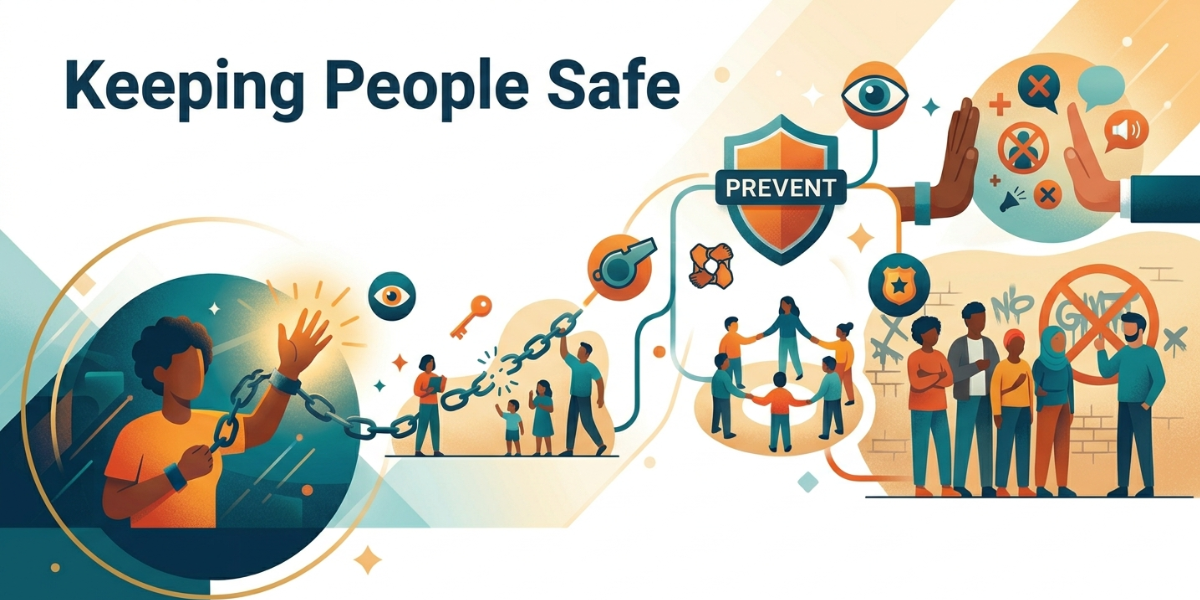
Keeping People Safe: Recognising Modern Slavery, PREVENT and Hate Crime
Keeping people safe is everyone’s responsibility. By recognising signs of harm, exploitation, or abuse early, we can help protect vulnerable people and support safer communities.
Modern Slavery, PREVENT, and Hate Crime are serious issues that can affect people from all backgrounds. While these topics can be difficult to discuss, awareness is an important part of safeguarding and knowing how to respond appropriately can make a real difference.
Modern Slavery
Modern slavery can include forced labour, exploitation, domestic servitude, and human trafficking. People affected may feel trapped, controlled, threatened, or unable to seek help.
Signs to look out for:
- Someone appearing frightened, withdrawn, or anxious
- Signs that a person is being controlled by someone else
- Poor living conditions or signs of neglect
- Unexplained injuries
- Working excessive hours for little or no pay
- Limited access to money, identification, or personal belongings
What to do:
If you are concerned someone may be at risk, report it safely. If someone is in immediate danger, contact emergency services by calling 999.
You can also contact the Modern Slavery and Exploitation Helpline on 08000 121 700 for advice and support.
What not to do:
- Do not confront suspected individuals directly
- Do not investigate concerns yourself
- Do not put yourself or others at risk
- Do not ignore signs that something may be wrong
PREVENT
PREVENT is part of the UK’s safeguarding approach aimed at protecting people from being drawn into terrorism or extremist activity.
Radicalisation can happen online or in person and may affect people of any age, background, or circumstance.
Signs to look out for:
- Sudden changes in behaviour or beliefs
- Expressing support for violence or extremist ideas
- Withdrawal from friends, family, or usual activities
- Accessing or sharing harmful extremist content online
- Increased secrecy around online activity or social groups
What to do:
If you are worried someone may be vulnerable to radicalisation, speak to an appropriate safeguarding professional, community organisation, or contact local police for guidance.
Early support and open conversations can help prevent harm and provide people with the support they need.
What not to do:
- Do not aggressively challenge someone’s views
- Do not ignore concerns because you are unsure
- Do not attempt to manage serious concerns alone
Hate Crime
A hate crime is any criminal offence motivated by hostility or prejudice towards someone because of disability, race, religion, sexual orientation, transgender identity, or other protected characteristics.
Everyone has the right to feel safe, respected, and included in their community.
Signs to look out for:
- Verbal abuse, threats, or intimidation
- Bullying or harassment
- Damage to property
- Offensive online messages or behaviour
- Someone becoming distressed, withdrawn, or fearful after interactions with others
What to do:
Take concerns seriously and support the person affected. If safe to do so, encourage reporting through the police, local authorities, or victim support organisations.
In Scotland, hate crimes can be reported to Police Scotland by calling 101, or 999 in an emergency.
What not to do:
- Do not dismiss incidents as “just banter”
- Do not minimise someone’s experience
- Do not stay silent if you witness abuse or discrimination
Speaking Up Matters
If something does not feel right, trust your instincts and seek advice. Raising concerns early can help prevent harm and ensure people receive the support and protection they need.
Useful organisations and guidance:
- Modern Slavery and Exploitation Helpline
- GOV.UK PREVENT guidance
- Local police services
- Victim support organisations
- Local safeguarding teams and councils
By staying aware, looking out for one another, and speaking up when concerns arise, we can all help build safer, more inclusive communities.
 Back
Back Top
Top