NDTI Small supports Report

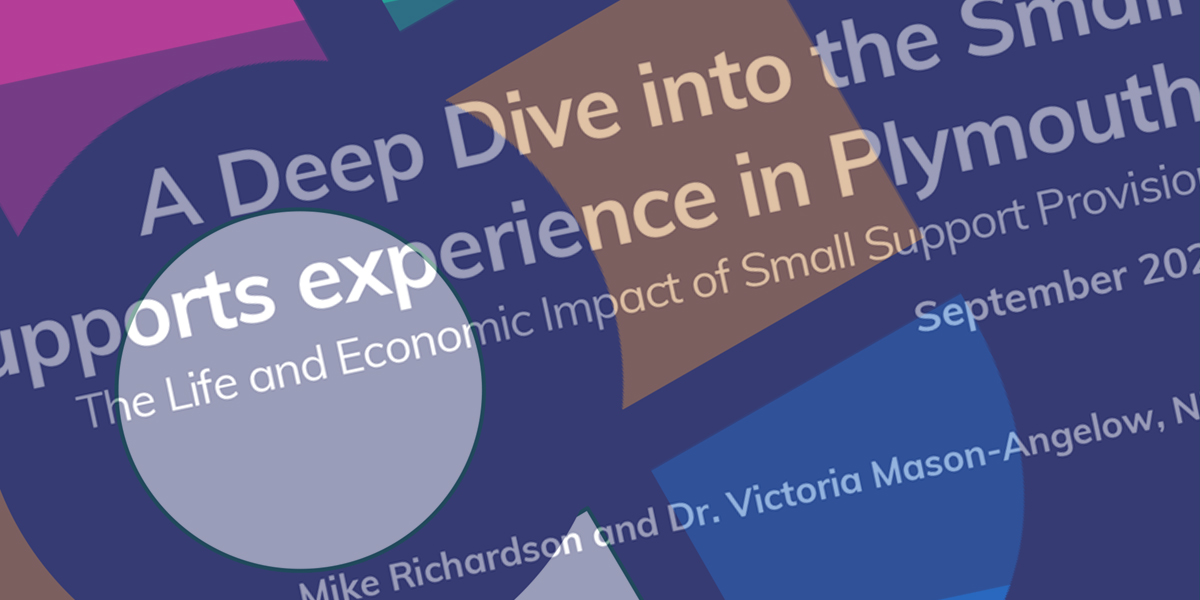
Transformation Through Small Supports: The Beyond Limits Impact

At Beyond Limits, we believe that support should be as unique as the person receiving it. A “Deep Dive” report by the National Development Team for Inclusion (NDTi) has validated this belief, showcasing the profound life-changing and economic impact of our person-centered approach.
By moving away from large, impersonal systems, we provide a refreshing alternative that is intimate, flexible, and grounded in individual needs. Here is a look at what the hard data says about the difference we make.

Radically Improving Individual Wellbeing

The most significant measure of our success is the happiness and stability of the people we support. The NDTi report used the Wellbeing Adjusted Life Year (WELLBY) metric to quantify this impact.

Massive Wellbeing Boost:
For the nine individuals featured in the report, average well-being scores soared from a low of 2.6 out of 10 (prior to Beyond Limits) to an incredible 8.3 out of 10.

Life-Changing Success Stories:
Clare, who moved through 18 different hospitals and institutions, saw her wellbeing score jump from 2 to 10.

Eloise and David experienced a total increase of 14 points in their combined wellbeing, moving from isolation to building a shared future.

The Economic Value of Happiness:
On an annual basis, our small support work generated a combined economic well-being value of more than £750,000 for these individuals.

Relieving Pressure on Public Services

High-quality support doesn’t just help the individual; it creates a ripple effect across the entire community by reducing the need for emergency and acute services.

Multi-Million Pound Potential:
Small support services are delivering significant savings across the public sector.

Direct Service Savings:
For six of the nine individuals studied, more than £950,000 was saved in other public services—including hospitals, ambulances, and the police and justice systems.

Incident Reduction:
In Danny’s case alone, incident fiscal costs (emergency responses) were reduced by over £168,000 per year as he moved from a secure unit to a stable home.

The Beyond Limits Way: People Over Processes

The report highlights Beyond Limits as a “blueprint” for how small support organisations should operate. Our success is built on four core pillars:

Seeing the Person First: We treat people as individuals with unique histories and potential, not as a set of diagnoses to be managed.

Meeting People Where They Are: Instead of imposing rigid structures, we build support around the person’s current emotional and physical needs.

Enduring Commitment: We are here for the long haul, even when things get tough, helping individuals navigate challenges without returning to institutional settings.

Empathy and Growth: We learn from setbacks and grow alongside the people we support, prioritising their wants and wishes.

A Future Driven by Impact

As our founder, Doreen Kelly, noted: “This report demonstrates the significant value of the small support model, which not only greatly enhances individual wellbeing, but also leads to substantial economic benefits”.

By investing in person-centred care, we aren’t just saving money, we are saving lives and building a more equitable, efficient, and compassionate society.

Read The Full Report – Online Flipbook

Louise in her new home sitting by the window.

Transforming Care: Louise’s Story

Louise’s Story is a video produced by NHS England as part of their Transforming Care series.

In the video you hear from Louise, and those who helped make her dream of moving home after spending over 15 years in hospital, a reality.

Louise’s story captures how hospitals are not homes, and Transforming Care is working to change the lives of people with learning disabilities, autism or both, for the better.

This short film explains how health and social care partners planned for and successfully moved Louise into her own home in spite of seemingly insurmountable barriers.

They achieved this through strong partnership working, good communication, flexibility and determination, and the film highlights the impact of these qualities on Louise’s wellbeing, while also celebrating the tenacity and creativity of those seeking to bring her home.

Beyond Limits purchased the property, but importantly, Louise’s tenancy is protected because the house was handed over to a housing association. This means that if Louise wants to change her support provider, she can do so and still remain in her home.

To find out more about the Transforming Care Programme visit NHS England’s website.

Screen capture from Transforming Care: Louise’s Story video

Transforming Care: Louise’s Story

Louise’s Story is a video produced by NHS England as part of their Transforming Care series.

In the video you hear from Louise, and those who helped make her dream of moving home after spending over 15 years in hospital, a reality.

Louise’s story captures how hospitals are not homes, and Transforming Care is working to change the lives of people with learning disabilities, autism or both, for the better.

This short film explains how health and social care partners planned for and successfully moved Louise into her own home in spite of seemingly insurmountable barriers.

They achieved this through strong partnership working, good communication, flexibility and determination, and the film highlights the impact of these qualities on Louise’s wellbeing, while also celebrating the tenacity and creativity of those seeking to bring her home.

Beyond Limits purchased the property, but importantly, Louise’s tenancy is protected because the house was handed over to a housing association. This means that if Louise wants to change her support provider, she can do so and still remain in her home.

To find out more about the Transforming Care Programme visit NHS England’s website.

Photo of people at the try before you apply event

Try before you apply

Have you ever considered working as a support worker? Do you think it’s all about strict routines and rushing from one person to another, never having time to get to know a person and what they need? These things are a long way from the full story at Beyond Limits. Our support workers are making a real difference every day to people’s lives and supporting people to achieve their true potential.

We are running a series of events in Plymouth, Cornwall and Somerset to give anyone interested a much better picture of what our support staff do.

New sessions will be announced on this page…

Each event will include:

An introduction by a senior manager
One of our managers will talk about our pioneering style of support. We will explain why we are working to change the world for people with learning disabilities, mental health issues and other needs.

How our support changes lives
A person we support will talk about what Beyond Limits support means to them.

Friends and families
A family member or friend will talk about the way we work together to make sure the support is right for the person we are support.

What the job is all about
A support worker will talk about their role at Beyond Limits, some of their experiences, challenges, what they enjoy and what gives them job satisfaction.

We look after our staff
Our HR manager will explain how we look after our staff, our benefits and approach to continuing personal and professional development.

Try before you apply dates

If you are interested in learning more about support work but can’t make the date in your area please get in touch.

Dandelion with seeds blowing away in the wind across a clear blue sky

UK consultancy – helping others change

On this page Doreen Kelly, Director of Beyond Limits, talks about Beyond Limits consultancy services.

I have been working in health and social care services since the early 1980s.

In that time I have learned two important things:

  • tailor made is better than off the peg
  • stay small, emulate big.

Tailor made

Services only work properly when they are designed to ‘fit’ people, taking into account their needs as well as their hopes and ambitions for themselves. If you want to design a service that really works and is truly person centred, you have to learn about the person you are being asked to support. Find out from them and people close to them what they like, what they want to do with their lives, where they want to live, and then plan a service to respond to what they’ve told you. It’s like buying a suit or a dress.

Photo of Doreen Kelly, CEO Beyond Limits giving a presentation.

If you go to a tailor you can tell them what colours, style and fabric you like. They listen to what you want, take your measurements and make something that fits well, which you feel comfortable in, and which can, if you wish, last a lifetime. That’s the approach we take to service design. It’s better for the person supported, because they get what they want, and it makes sense financially because the chances of costly placement breakdowns are virtually eliminated.

Stay small, emulate big

In today’s competitive market providers have to find a way of staying small and responsive, while getting the economies of scale of bigger organisations.

Small organisations tend to be less procedure-bound, more flexible and more approachable. This is crucial in social care, because you have to be ready to change how you do things to meet the changing needs and demands of the people you support. Often if an organisation is unable to do this it leads to expensive placement breakdowns, which have both a financial cost and a potentially serious human cost.

Even so, bigger organisations have economies of scale, which can give them more influence and power. Our approach is to get the best of both worlds, by forming networks of small, person-centred organisations that can share functions like finance and HR support, and office premises. So we can stay small and emulate big.

We have lots of evidence that this approach works, both here in Devon and in Scotland. An example is the 2105 Award we received for our work with Plymouth Community Healthcare team.

If you are interested in the Beyond Limits approach I am available to talk with you about how you can make it real in your organisation. Please get in touch.

Video – How Beyond Limits works

This page explains how our support works, about working for us and Consultancy for change.

Beyond Limits is a support provider that also uses its experience and knowledge to offer consultancy to others who wish to change services.

As a provider we support people with learning disabilities, mental health issues and other needs. We have a strong interest in helping people move back home from ‘out of area’ placements. We relish working with people labelled as challenging.

Get in touch…

If you’d like an informal chat about working for Beyond Limits or to receive our employment flyer by post, please get in touch using our contact form.

Waking Night Worker for Mike

We are so proud of Sue

We are proud of Sue and the person she supports for being involved in a Proud to Care campaign showcasing the very special job she does every day.

Sue is a great example of someone who started with us as a support worker and with training and development she has developed her career. It really is a fantastic job and a typical day often involves, swimming, attending the local Rock Choir and of course sampling cake. Nearly everything starts or ends with cake.

We are currently recruiting a Team Leader and Support Worker for this team, you can find details of the two jobs here: Team leader | Support worker

Follow this link to read the article on the Proud to Care website.

We have joined the Employers Initiative on Domestic Abuse

Domestic abuse can happen to anyone of any age, gender, race, sexual orientation, religion or background. Abusive behaviour includes: physical or sexual abuse, violent or threatening behaviour, emotional abuse, controlling or coercive behaviour, economic abuse, psychological, or other abuse.

The Domestic Abuse Act 2021 makes clear that employers should consider the impact of domestic abuse on their employees as part of their duty of care. As a responsible employer, Beyond Limits are a member of the Employers’ Initiative on Domestic Abuse (EIDA) www.eida.org.uk and we are committed to their membership charter which includes fostering a safe, supportive and open environment to allow domestic abuse to be effectively tackled in the workplace and supporting employees who are affected by domestic abuse and those that report it by providing access to information and services.

Organisations that can provide support

If you or someone you know needs help there are several organisations that can provide support. You do not have to wait for an emergency situation to find help. If domestic abuse is happening to you, it’s important to tell someone and remember you’re not alone.


Advice and help for women experiencing domestic abuse.

I need help – information and support on domestic abuse (womensaid.org.uk)

The Survivor’s Handbook provides practical support and information for women experiencing domestic abuse.
The Survivor’s Handbook – Women’s Aid (womensaid.org.uk)


Men can contact the Men’s Advice Line on 0808 8010 327 or
Domestic Abuse Helpline for Men | Men’s Advice Line UK (mensadviceline.org.uk)


If you identify as LGBT+ you can find information here
LGBTQ+ victims of domestic abuse – IDAS


We have our Restraint Reduction membership!

Beyond Limits are delighted to have had our pledge approved and accepted by the Restraint Reduction network. We understand that supporting people, especially those individuals who at times may present behaviours that cause concern, requires a commitment to place people at the centre of everything we do.

Restraint Reduction network logo

We vow to continue our work in this regard with people and their families and work with their best interests. Restrictive practice will only be used as a last resort, in an emergency to maintain safety and in circumstances where there is immediate or imminent harm and where alternatives cannot be used or have failed.

Under no circumstances…

Under no circumstances will any restrictive practice which is considered degrading or abusive ever be used and restrictive practices will not be used to enforce rules or to punish or coerce. We will continue our work, supporting people to be all they can be, having lives that make sense for them, free from restrictions and institutional living.


To learn more about the Restraint Reduction Network and their work, visit their website: www.restraintreductionnetwork.org


Photo of flowers growing

We invest in our staff

We invest in you so you can invest in the people you support. This is why we provide our staff with some of the best training around.

Our training starts with your invite to our Welcome Day, this is your introduction to Beyond Limits, followed by your comprehensive induction. We then provide training throughout the year which involves leadership and skills and development training. We do this because we don’t want you to feel stuck, to stop learning new skills, we want you keep developing, both personally and professionally, as we know that if our staff are developing, then the people we support are developing too.

What people say…

Beyond Limits really is a great place to work. This is why we handed this section to the people and families we work with and our staff, we thought you would like to hear it directly from them about their experiences of working with us.

What our staff say

“He used to spend large amounts of his time sat on the sofa, now he’s out doing stuff. He’s the bravest guy I know.”

Hamish O’Brien, Team Leader.

What the people we support say

“My mum always used to worry about me because its not very nice been institutionalised in hospitals because you want to have your own life and your own freedom, my mum isnt worried about me so much at the moment the whole time Ive been with BL my mum stopped worrying and basically Ive got my confidence and independence back”.

Hannah.

What Families say

“Beyond Limits is breaking the mould, you have given my daughter her life back”

Michelle Beattie.

“Thanks so much for changing all our lives but mostly for H, she is unrecognisable now”

Sue Addy.

What we say

“we want staff to be expert in the person, we don’t need staff to be an expert in learning disabiities or mental health or physical disabilities, we need staff who can grow and be an expert in the person they are supporting and understand that whatever issue that person is dealing with how that affects them and their life”

We’ve updated our Recommend a Friend scheme

Finding the right quality of care staff is a major challenge. It’s important that we don’t just fill the vacancies we have but that we fill them with the right people.

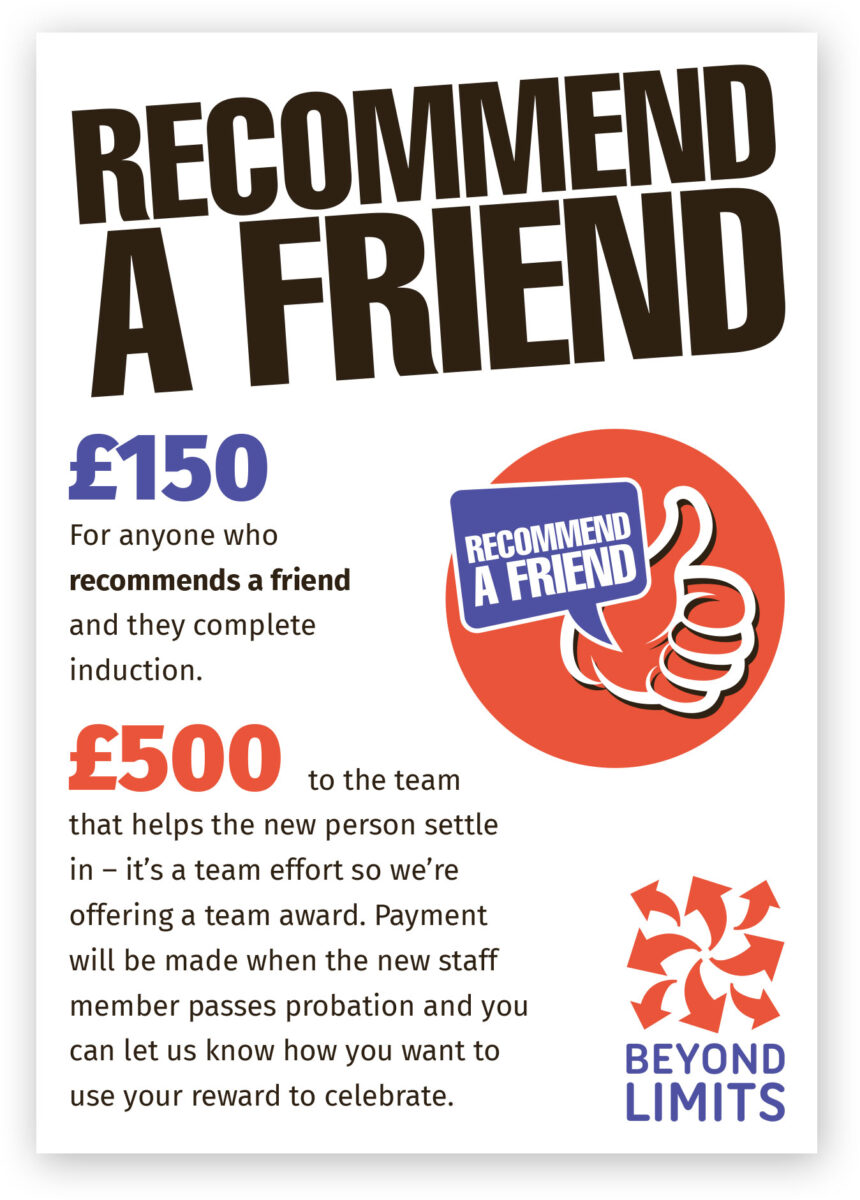
The right people are people like you, people who are already working here. That’s why we have launched our new and improved Recommend a Friend scheme because we know that you know the very next person you want to fill that vacancy in your team.

It’s why we are now offering bigger incentives than ever to make sure that we get the right people and you get the person you want. For each person that you recommend and that we hire, you will receive £150 once that person has completed their induction. We also know that sometimes having a new person join your team can be difficult and unsettling. Some of you might be asked to spend extra time with them showing them the ropes. We recognise it’s a team effort and so the biggest reward goes to the whole team. £500 will be paid when the person passes their probation and you can let us know how you want to use your reward to celebrate.


If you already have someone in mind please, get in touch.


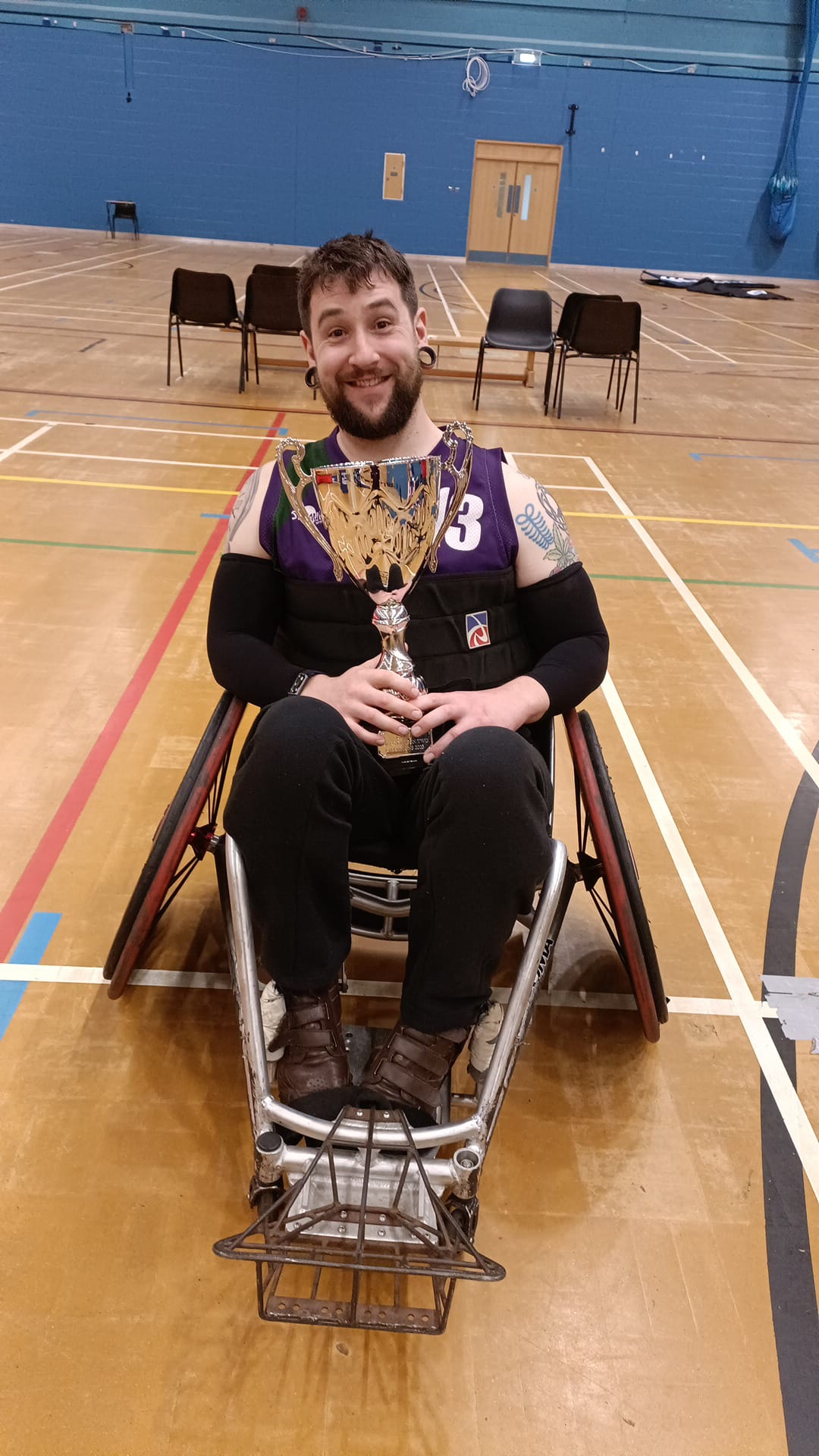
Well done Rich!!!

Rich was on the winning side recently when his team won the division 2 wheelchair rugby league. Rich plays wheelchair rugby with the West Country Hawks and they played over 3 weekends which took place in Stoke-on-Trent.

He was involved in a total of 16 games and they remained undefeated across of all the games, little wonder that Rich looks so happy. He plays as a defender and he was a key player for his team, his force and strength stopped a number of goals from being conceded.

Rich holding the winners cup in his wheelchair in a gym.

Well done Rich, and who knows, this time Stoke-on Trent, next time the Olympics!

West Country Hawks – Great Britain Wheelchair Rugby (gbwr.org.uk)


Speech balloons graphic

What people say about Beyond Limits

We really value all the feedback we receive. Below is a mix of feedback from the people we support, family members, staff and professionals.

If you have feed back about any aspect of our work please get in touch.

“Thank you from our hearts”.

Michelle, Jim and family, Family members

“You’re the best thing to happen to Lucy and the family, many thanks”.

Zara, Family member

“Being included and listened to is something very special. Your Family Charter does what it says on the tin. Hands up to Beyond Limits for your far reaching views”.

Trisha Searle, Family member

“Beyond Limits is breaking the mould and is brave for writing the Family Charter. The proof of the pudding is that it works. You have given my daughter her life back. Communication is key. Thank you”.

Michelle Beattie, Family member

“My mum always used to worry about me because its not very nice been institutionalised in hospitals because you want to have your own life and your own freedom, my mum isnt worried about me so much at the moment the whole time Ive been with BL my mum stopped worrying and basically Ive got my confidence and independence back”.

Hannah, Supported by Beyond Limits

What to do when you have Type 2 diabetes

On this page are a video and two booklets about Diabetes.

What is diabetes video

What to do when you have diabetes – An easy read guide.

The first booklet is by Diabetes UK who are leading the fight against diabetes.


If you are using a desktop or laptop computer you can click on the Full Screen button to zoom the page. Click on your browser’s back button to return to normal size.

Getting started if you have Diabetes

This booklet was produced by the Bristol Central Community Learning Team.

What to tell the police when calling 101 or 999

This page tells you when to phone 999 or 101 and what questions you will be asked.

Phoning 101 or 999

When you need help or advice about a crime or incident it is important that you phone the police.
If you are not in danger, are unsure what to do, want to contact your local PCSO or have lost or found something you can call 101.
You must phone 999 if the crime you have experienced has just happened or is happening now. This includes being threatened, assaulted or burgled.

Questions you will be asked

When you phone either 101 or 999 you will be asked lots of questions. This is so the police can make sure you get the right kind of help.
It is important to tell the operator:
If you are in danger, if you are alone, where you are calling from and who was involved.
What happened and when it happened.
Where it happened.

You also need to say

Your name and address.
Whether this has happened before.
How you are feeling and if anyone is with you
Whether you have any additional needs for example: a learning disability, are hard of hearing, use Makaton.
With thanks to Dawn from the Crownhill Comms Room and Plymouth People First who worked with Devon and Cornwall Police to produce this information.

Who’s Who at Beyond Limits

On this page you will find names and contact details of some key staff at Beyond Limits.

Managing Director, Rebecca Chadwick

Rebecca is responsible for overseeing the day to day delivery of services to the people we support. If you have any questions or queries relating to the people we support, Rebecca can help you with this.


Non-Executive Director, Doreen Kelly

Doreen is responsible for overseeing the day to day running of the organisation and she is also the Nominated Safeguarding Lead.


Registered Manager, Kathleen Griffiths

Kathleen is the registered manager and service development lead for Beyond Limits. Kathleen is responsible for making that the people who use our services have their needs met. We provide support which is regulated by the Care Quality Commission and Kathleen’s role is to make sure that we meet our legal responsibility and provide support that meets the requirements of the regulations. Kathleen is also the Designated Safeguarding Lead, you must contact Kathleen and let her know if you have had a safeguarding issue.


HR and Office Manager, Edyta Piekarska

Edyta is the HR and Office Manager for Beyond Limits. Edyta is responsible for the overall running of the administration team and she is the first point of contact for all HR matters. Edyta can help you with queries relating to health and wellbeing, performance management and equality and diversity. She co-ordinates and carries out employee engagement programmes as well as various other activities and initiatives.


Photo of Jill Barbour

Finance Director, Jill Barbour

Jill is the Finance Director for Beyond Limits. Jill is responsible for the money in the organisation and for making sure the books balance. Jill supports teams with the money connected to the people we support, this is our Individual Service Funds (ISF) and for making sure we meet our bigger financial obligations and of course for making sure we all get paid.

There are also a range of other people and departments that support the day to day running of Beyond Limits.

Salary

For any queries in relation to your salary you can email payroll by using your Microsoft Outlook Account

Finance & Carista

For any queries in relation to other aspects of finance or your Carista account, you can email finance, this is available by using your Microsoft Outlook Account.

Training and Online learning accounts

For any queries in relation to your training, including gaining access to your online learning accounts, you can email training, this is available by using your Microsoft Outlook Account.

Job vacancies and recommend a friend

For any queries in relation to job vacancies or your referrals for the recommend a friend scheme you can email vacancies, this is available by using your Microsoft Outlook Account.

Admin and change of details

For all queries in relation to administration, for example change of address, updates to driving licence, access to PPE or stationary, you can contact the main office

Office phone number

The office number should you require it is 01752 546449.

Why the CQC is important for everyone

The Care Quality Commission (CQC) is the independent regulator of health and social care in England. As a provider of health and social care Beyond Limits is regulated by CQC which means we have to make sure the services we supply to people who need support meet certain conditions.

The CQC monitors, inspects and regulates our services and they publish their findings, these findings are available to the public. If they find that services do not meet certain criteria, they can use the powers they have to take action. These powers range from warning notices, changing or imposing conditions on the care provider or placing the care provider in special measures. In extreme cases they can prosecute a care provider when people have been harmed or placed in danger of harm.

Beyond Limits is currently rated as an outstanding provider, you can find more details about this here Beyond Limits (Plymouth) – Care Quality Commission (cqc.org.uk)

It is very important that we all work in a way that provides the best support possible for people who use our services. This means engaging productively in training that the organisation provides, taking part in support and supervision and upholding the values and ethos of the organisation.

You can find out more about the work that CQC do here About us – Care Quality Commission (cqc.org.uk)

If you have concerns about any aspect of how a service is being delivered then you should discuss this with your line manager. If your concerns are in relation to your line manager then you should contact the Registered Manager, Kathleen Griffiths. Details of how contact Kathleen can be found in the who’s who section of the staff pages.